The Craft of Sewing: Lockstitch, Coverstitch, Overlock — Stitches Decide How Long Clothes Last
- Share
- Issue Time
- Oct 29,2026
Summary
The Craft of Sewing: Lockstitch, Coverstitch, Overlock — Stitches Decide How Long Clothes Last
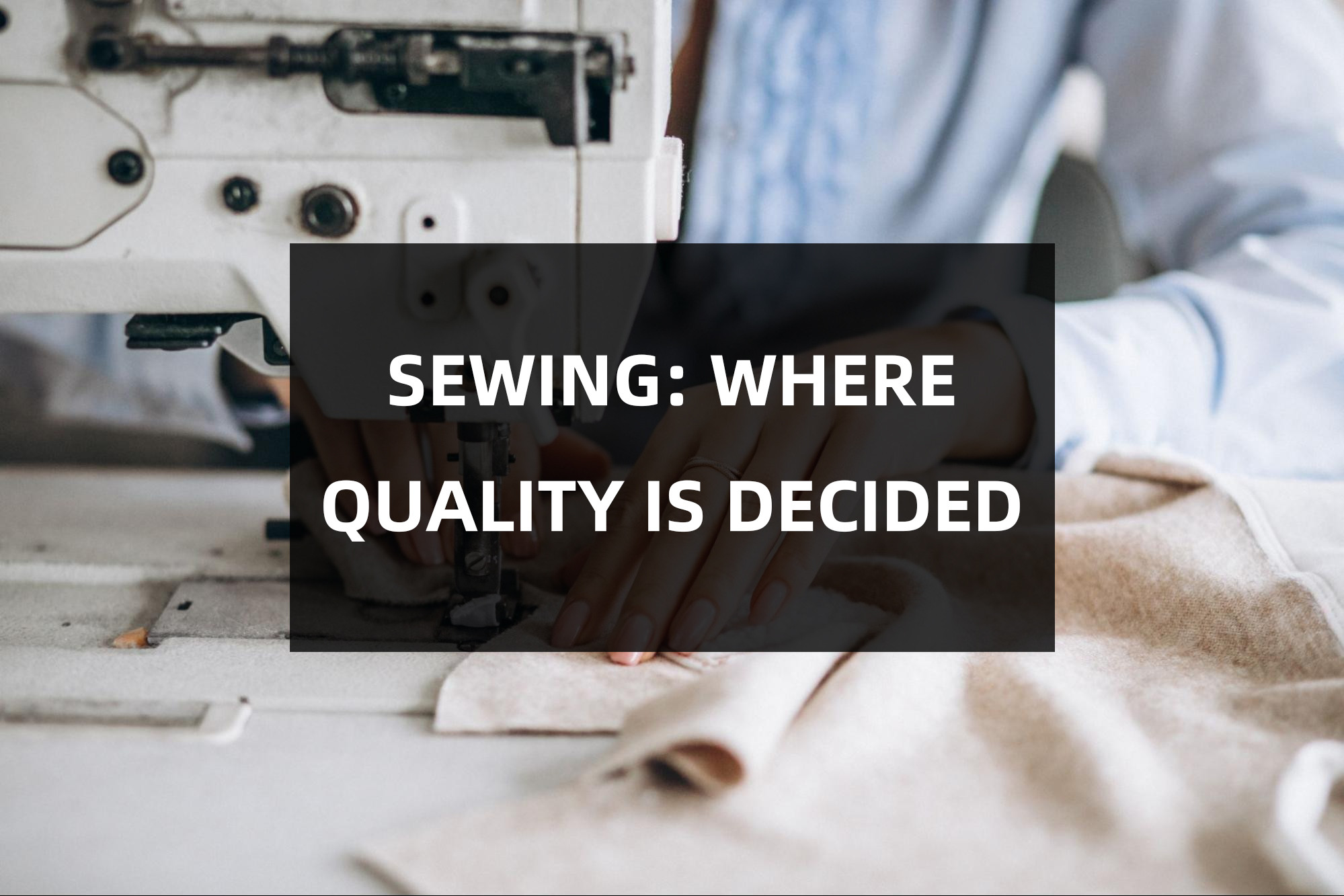
rinting decides whether a garment looks good. Washing gives it character. But **sewing decides how long it lasts** — whether a piece wears for one year or three usually comes down to the stitches.
When brands evaluate factories, most attention goes to fabric and printing — while sewing itself gets overlooked. Yet sewing is the clearest mirror of a factory's fundamentals: whether the stitch lines run straight, seam allowances are even, and stitch density is right — one glance tells you the skill level of the workers.
1. The Three Most Common Sewing Machines
Three machine types handle the bulk of garment sewing:
1. Lockstitch Machine
1. Lockstitch Machine
The most basic sewing machine, two threads interlocking for a flat, clean stitch. Shoulder seams, side seams, sleeve seams, hems — most straight-line work uses it. **Solid lockstitch work is step one in judging a sewer's fundamentals.**
2. Coverstitch Machine
Three or four threads, two parallel lines on the front and a chain stitch on the back — with elasticity. Used for T-shirt hems, cuffs, and ribbed trims that need to be both stretchy and flat. **The double-needle stitch you see on streetwear T-shirt hems is coverstitch.**
3. Overlock / Serger
Three or four threads that wrap the raw fabric edge to prevent fraying. Every cut piece is overlocked before assembly — **good overlocking determines how many washes before a garment starts coming apart.**
2. Four Details That Reveal Sewing Quality
1. Stitch density.The common standard is 12–14 stitches per 3cm. Too sparse — seam strength drops, seams pop. Too dense — wasted time and puckering. **Even stitch density is the first indicator of sewing quality.
2. Straight stitch lines.Sewn lines should be perfectly straight — no wobble. Collars, front plackets, pockets — anywhere visible to the eye, a crooked stitch line reads instantly as cheap.
3. Even seam allowances.The fabric margin left at a seam (allowance) should be consistent, standard 0.8–1.2cm. Uneven allowances mean uneven stress — the garment distorts with wear.
4. Accurate matching.Side seams to shoulder seams, armholes to sleeves, ribbing to hems — **where things should align, they must align.** Poor matching means the garment twists on the body.
3. The Hard Spots Where Sewing Goes Wrong
Sewing isn't just "working a machine" — certain positions test real skill:
- Ribbed collars:the collar ribbing must be sewn with even tension; uneven stretch and the collar comes out crooked
- Armhole curves:curved sections are hardest to sew flat — easy to pucker or pull unevenly
- Heavy fabric joins:heavyweight hoodies, wool-blend jackets — thick seams need machines with enough bite and steady stitch tension
- Decorative topstitching:like the white piping lines you see on streetwear — topstitch must be straight, even, and seated in its channel. **It's the showpiece of sewing skill.
4. Advice for Brands
1. Focus on the sewing when auditing or reviewing samples.Turn the sample inside out and look: messy stitches? Excess threads? Uneven allowances? **The inside of a garment is the honest mirror of a factory's real level.
2. Check the "three straights" in bulk inspections.Straight threads, straight seams, straight matching. Pull a few random pieces and flip them inside out — sewing problems get caught quickly this way.
3. Don't trade stitch density for labor savings.Some factories loosen stitch density to save a few cents per piece — and the customer gets a garment that pops seams after two washes.
Money saved on sewing comes back as return-shipping costs.
Money saved on sewing comes back as return-shipping costs.
Printing is the face; sewing is the lining. When the lining is done right, clothes wear longer — and look better while doing it.
We are a streetwear custom garment factory based in Dongguan, China. Our sewing floor is built around streetwear production — white piping, ribbed collars, heavyweight seams are daily work. 50-piece MOQ, 7-day sampling. If sewing quality matters to you, come see our stitch lines in person — seeing is believing.