How many pairs of hands does a single garment pass through?
- Share
- Issue Time
- Nov 26,2026
Summary
How many pairs of hands does a single garment pass through?
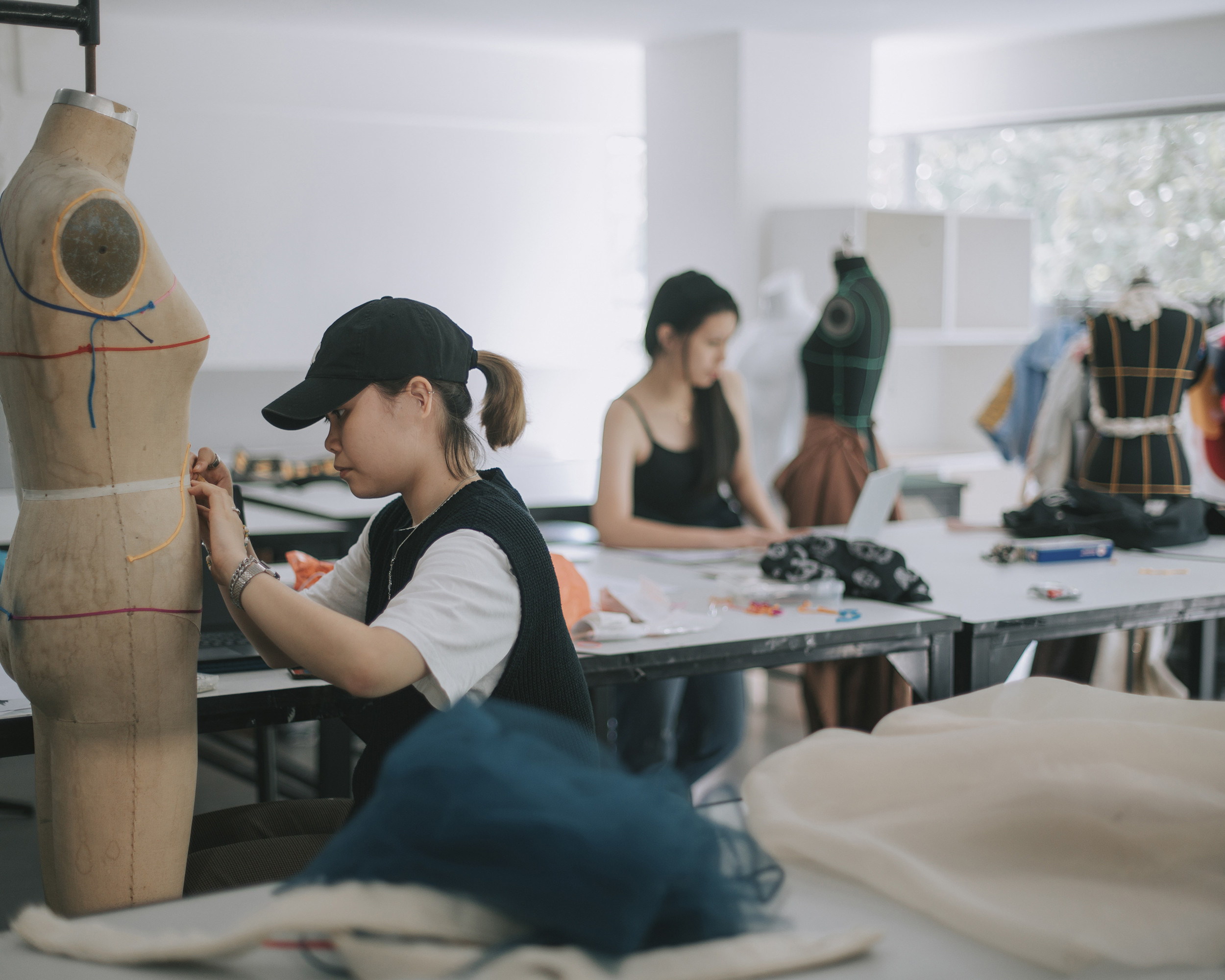
What the client sees is a single image or a finished product—but behind it lies a relay process involving over a dozen people.
Pattern Maker — Transforms designs into paper patterns, defining dimensions and construction.
Purchasing — Sources and orders all necessary materials, including fabrics, zippers, webbing, and leather labels.
Merchandiser — Oversees the entire process from start to finish: manages schedules, expedites material delivery, tracks progress, coordinates the timing of each production stage, and serves as the first point of contact when issues arise.
Fabric Inspector — Checks for defects such as yarn snags, color variations, or holes, and tests for fabric shrinkage.
Cutting Room — Lays out the fabric, arranges pattern pieces, performs the cutting, and labels/bundles the cut components.
Sewing Team — A group of workers with specialized roles; each person handles a specific task, such as assembling collars, sleeves, plackets, or hems.
Printing / Embroidery / Rhinestone Application — Specialists operate dedicated machinery to apply specific designs to designated locations on the garments.
Garment Washing — Processes entire batches in wash machines; technicians rely on their expertise to control temperature, duration, and the specific degree of "distressed" or aged effect.
Finishing — Trims loose threads, steams/irons the garments, and conducts a final visual inspection.
Quality Control & Needle Detection — Each garment passes through a needle detector, and measurements are verified via spot checks.
Packaging — Folds garments, attaches labels, places items into individual bags, packs them into cartons, and prepares the packing list.
Since every pair of hands brings a unique touch, every step of the process must be measured against a single, consistent standard. The reason we require signatures when finalizing a sample is to establish that specific garment as the definitive reference—a common benchmark for everyone involved. With this reference in place, even if individual techniques vary, the final result will remain on target.
In short: a garment is not the work of one person, but the product of an entire chain. If every link in that chain remains true to the standard, the final piece will be exactly as intended.